

100's Chart Color-Coded Poster

Price
Regular price $32.00
Regular price Sale price $32.00
Save $-32
/
Format
Format Guide

Physical: physical product with digital resources

Download: printable PDF file(s)

Slideshow: slideshow(s) with audio

Shipping calculated at checkout.
  • In stock, ready to ship
  • Backordered, shipping soon
  • Free U.S. Shipping
  • 30 Day Return

Try Before You Buy

Description
Product Specs
Related Articles
Tools & Resources

Turn the 100s chart into a powerful pattern-discovery tool.

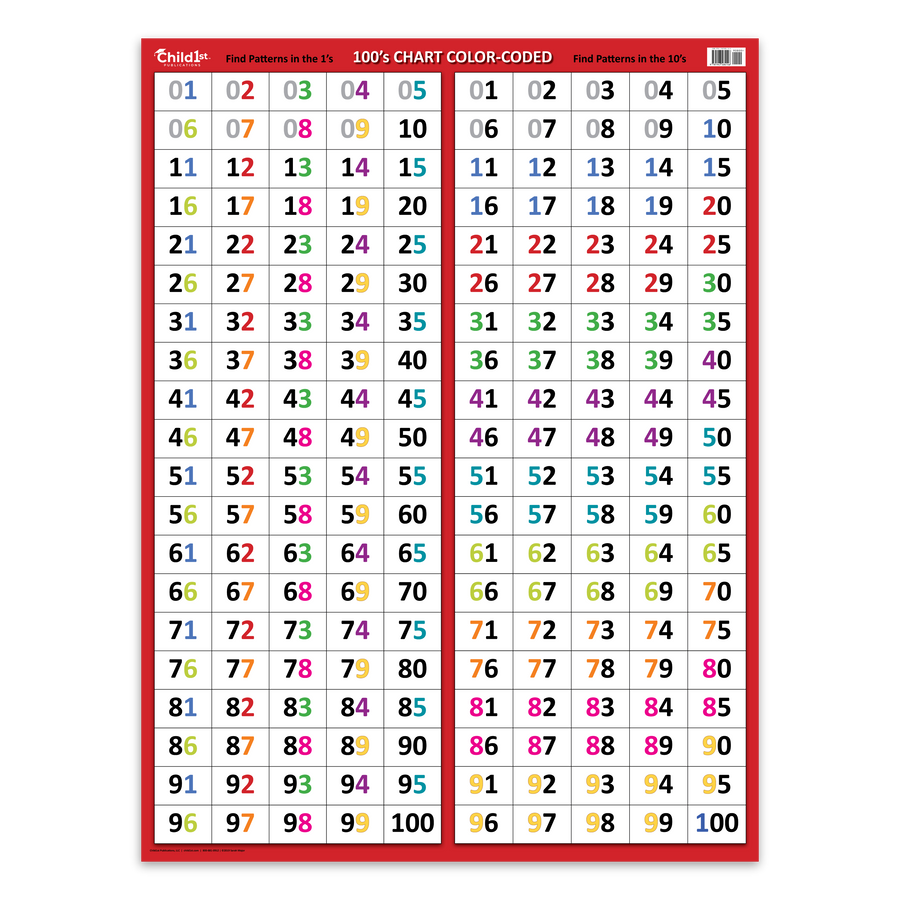
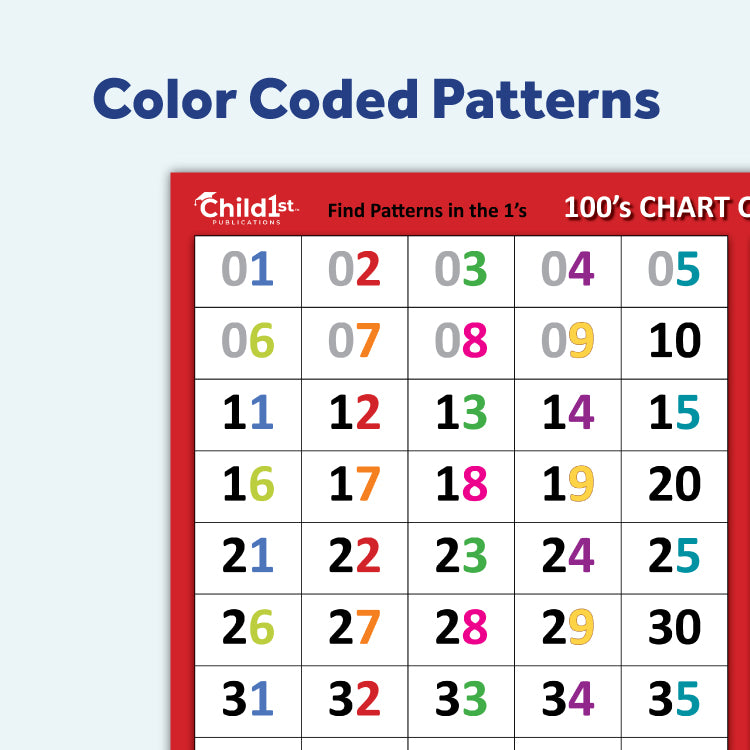
The Color-Coded 100s Chart Poster helps students build strong number sense by making patterns visible. Instead of simply memorizing numbers, learners explore how numbers relate to one another through color and structured layout.

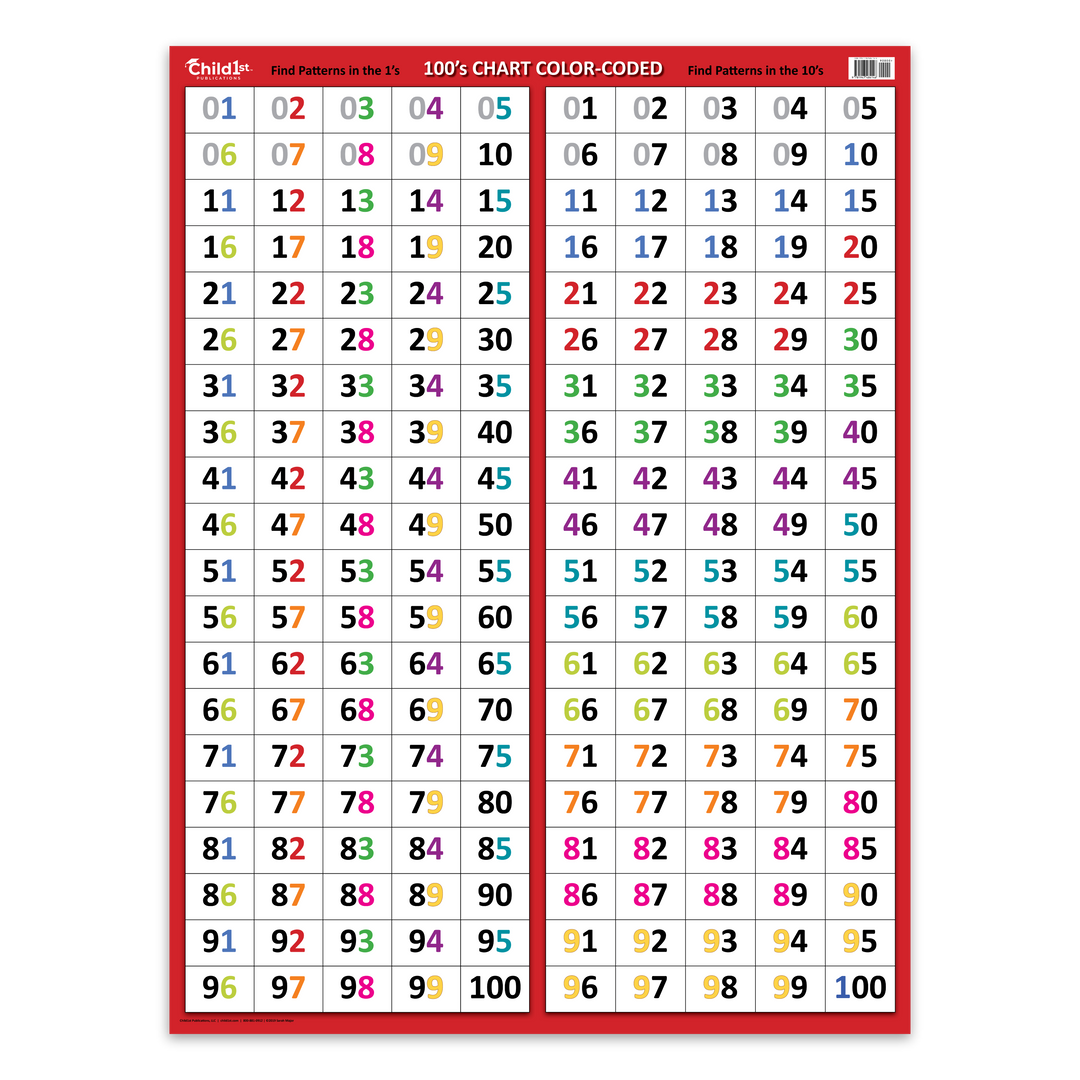
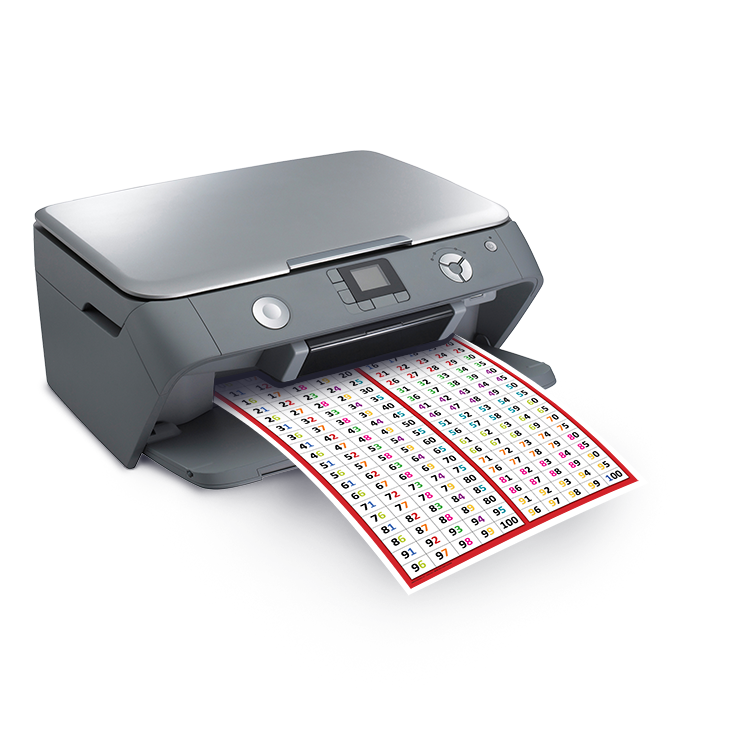
Two charts are displayed side by side — one highlighting patterns in the 1s column and the other emphasizing patterns in the 10s column — giving students multiple ways to see and understand number relationships.


Why It Works

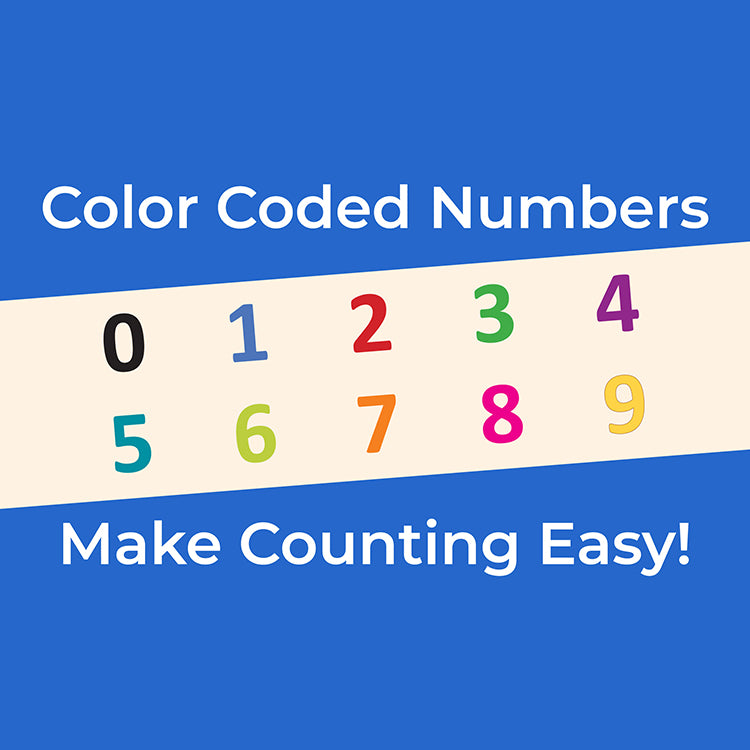
  • Color-coding highlights patterns in the 1s and 10s places
  • Encourages independent pattern recognition
  • Strengthens place value understanding
  • Supports skip counting and mental math
  • Arranged in rows of 5 to reinforce time and money concepts

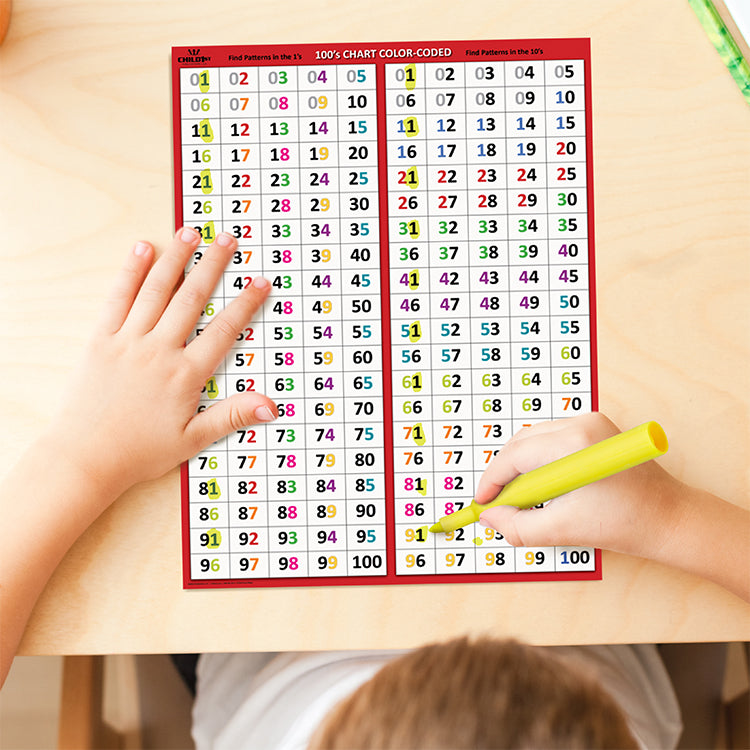
Students typically begin with the 1s chart, identifying similarities across numbers, then transition to the 10s chart to deepen their understanding of place value and number structure.

By giving students time to discover patterns on their own — and modeling how to look for them — educators foster ownership, curiosity, and mathematical confidence.


Available Formats

  • Physical – 36” x 48” full-color poster
  • Download – Printable PDF file

Both formats include a download of pattern-seeking activities.


A simple visual tool that transforms counting into deep number understanding.

  • Physical physical poster,
    measuring 36” x 48”
  • Download printable PDF
    file of the poster
You may also like

FAQs

Math can often be an abstract subject, filled with symbols that may pose challenges for children who are visual and spatial processors. These learners thrive when they have access to an educational approach that conveys the meaning of mathematical symbols and procedures in ways that align with their unique learning style.

Right-brain dominant learners, in particular, have distinct needs when it comes to learning math. They excel when they can comprehend the underlying concepts and the meaning behind mathematical operations, rather than relying on rote procedures. For these learners, memorization is often less effective because the information tends not to stick in long-term memory. Kinesthetic children, who frequently possess a strong spatial and holistic perception of math, tend to see the bigger picture surrounding mathematical problems. They can often visualize or intuit solutions without needing to follow the minute, historical steps often taught in traditional math education.

To effectively engage right-brain dominant learners, it is crucial to encourage them to explore the captivating patterns that emerge within the realm of numbers. By presenting numbers in a broader context, these learners can remember how to solve problems and recall number facts more readily. The use of visual imagery, storytelling, and hands-on activities plays a central role in their learning style, despite these elements not being traditionally associated with math education. By incorporating these strategies, educators can help right-brain dominant learners make sense of and excel in the world of mathematics.

We intentionally avoid labeling our resources with specific grade levels or ages to place the emphasis on each child's unique abilities. While the skills covered typically span from kindergarten to third grade, individuals of various ages have found success with our materials.

Right-brain learners possess distinct characteristics that distinguish them from their left-brain counterparts. These characteristics pertain to their information intake, processing methods, and preferred memory strategies. When we discuss right-brain learning, we are essentially describing the way they naturally absorb, process, and retain information.

Right-brain dominant learning, often associated with the right hemisphere of the brain, refers to a learning style that emphasizes creative and holistic approaches to understanding and retaining information. Strategies that are highly effective include multisensory materials, visuals, stories, movement, and hands-on activities.

Multisensory resources, in general, are tailored to diverse learning styles and prove exceptionally effective for children with varying learning needs. They foster a more inclusive and flexible learning environment, empowering these children to grasp concepts more readily and with heightened engagement. Our multisensory materials are specifically designed to address the unique needs of children with learning differences, ensuring their success.

Recently viewed