



6 Effective Strategies for Teaching Visual Learners

Sarah Major, M.Ed. is passionate about working in harmony with a child's immaculate design to support their learning strengths. As a Title 1 Program Director and Designer, Sarah earned awards for creating her own multisensory educational resources that have now been sold in all 50 states and over 150 countries. By design, Sarah’s approach targets multiple pathways to the brain, empowering visual learners to move past memorization, fostering learning that is rapid and effortless.
Some children seem to understand a concept almost immediately when they can see it.
A verbal explanation that feels complicated may suddenly make sense when it's accompanied by a diagram, demonstration, pattern, written example, or meaningful image.
At Child1st, we often describe children who have a strong preference for processing information this way as visual learners.
That doesn't mean they should learn only through pictures—or that every child who benefits from visuals learns in exactly the same way. It means visual information can provide a particularly useful pathway for understanding, organizing, and remembering new concepts.
If you've recognized that a child benefits strongly from visual information, here are six practical teaching strategies for visual learners that can be used at school or at home.

1. Show the Big Picture Before Teaching the Details
One of the most helpful strategies for visual learners is to let them see where they're going before walking them through each step.
Imagine giving someone puzzle pieces one at a time without ever showing the picture on the box.
They might eventually figure out how everything fits together.
But seeing the completed picture first makes the individual pieces much easier to understand.
Learning can work the same way.
Before beginning a new lesson, give the child an overview.
For example, before teaching the individual parts of a plant, show the whole plant.
Before studying a historical event, show where it fits on a timeline.
Before teaching the individual steps in a math procedure, demonstrate the entire process once.
Before studying the details of a story, preview its setting, characters, and central idea.
Then move into the details.
This gives the learner a mental framework for organizing the information that follows.
Try this:
At the beginning of a lesson, briefly answer three questions:
What are we learning?
Why does it matter?
How do the pieces we're about to learn fit together?
Then begin explicit instruction.
The overview doesn't replace sequential teaching.
It gives the sequence somewhere to belong.

2. Turn Important Information Into Meaningful Visuals
Pictures can be powerful teaching tools, but simply adding pictures to a lesson doesn't necessarily make it better for a visual learner.
The visual needs to have a purpose.
A useful visual should help the child see something important about the concept.
For example:
- a timeline shows the order of historical events;
- a number line shows relationships among numbers;
- a diagram shows how the parts of a system fit together;
- highlighting can make a spelling pattern stand out;
- an illustration can connect an abstract word with its meaning; and
- an image integrated into a letter can reinforce the letter's shape and sound.
This is different from adding a decorative picture beside a page of text.
Ask yourself:
What do I want the child to notice?
Then make that information visible.
Visual prompts can also help
Sometimes a learner doesn't need an entire visual explanation. A small visual reminder is enough to retrieve something that has already been taught.
We've written separately about using visual prompts for letter formation, spelling patterns, word recognition, routines, and other learning tasks.
Visual Prompts and Cues for Learning: 8 Examples That Help Kids Remember
That article focuses specifically on visual cues and prompts.
Here we're looking more broadly at how to structure instruction for children who have strong visual learning preferences.

3. Make Patterns and Relationships Visible
Many visual learners are quick to notice patterns, similarities, differences, and relationships.
Use that strength deliberately.
Instead of presenting information as a collection of unrelated facts, help the child see how the pieces connect.
In spelling
Rather than presenting:
light
night
right
sight
as four unrelated words to memorize, draw attention to the shared spelling pattern.
What do the words have in common?
What sounds are represented by the letters?
What changes from word to word?
Color or highlighting can be useful here—not because colorful worksheets automatically improve learning, but because color can direct attention to the feature you're teaching.
In math
Use objects, drawings, number lines, arrays, or diagrams to show relationships among quantities.
A child learning multiplication can see:
3 groups of 4
before relying only on:
3 × 4 = 12
A visual model helps make the relationship concrete.
In grammar
Compare examples side by side.
For instance:
dogs
dog's
Highlight the apostrophe and connect that visible difference with the difference in meaning.
In science
Use diagrams to show systems and processes.
Instead of expecting the child to hold a lengthy verbal description in mind, let them see how the parts interact.
The principle is simple:
Don't just tell the child the relationship. Help them see it.
4. Teach Reading and Phonics Visually—Without Teaching Children to Guess
This is an especially important area because visual learning and reading instruction are sometimes misunderstood.
Using visuals during reading instruction does not mean encouraging a child to look at a picture and guess what an unfamiliar word says.
Children need explicit instruction in how our written language represents speech.
That includes learning to:
hear the sounds in spoken words,
connect those sounds with letters and letter combinations,
blend sounds to read words,
and analyze words for spelling.
So how can we teach phonics visually?
Make sound-spelling relationships visible
Suppose you're teaching the sound /sh/.
Show the child that:
s + h → sh
work together to represent one sound in a word such as:
ship
You can highlight sh, map the sounds in the word, and compare it with other examples:
shop
fish
wish
Now the visual support is directing attention to the phonics information the child needs to learn.
Integrate letter shapes with meaningful images
When children are first learning letters, an image incorporated into the letter can provide a temporary memory connection between:
the letter's shape,
its name,
and its sound.
For example, Child1st uses mountains integrated into M to reinforce /m/.

The picture isn't replacing phonics.
It's reinforcing the sound-symbol relationship being explicitly taught.
[Internal link to Alphabet resources]
Make spelling patterns stand out
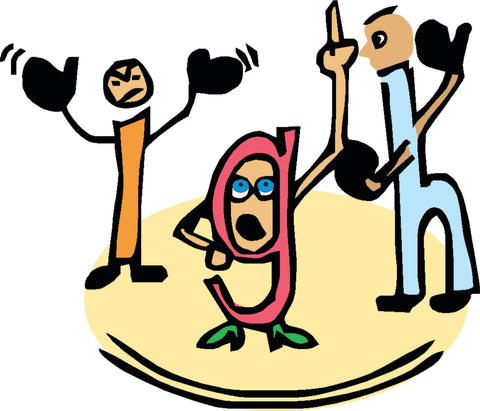
If you're teaching igh in words such as:
light
night
right
make igh visually prominent.
Say the words.
Identify their sounds.
Map the sounds to their spellings.
Then let the visual pattern reinforce what the child has learned.
What about sight words?
High-frequency words should not simply be treated as visual shapes for children to guess or memorize without attention to their sounds and spellings.
Teach children to look inside the word.
Which parts follow sound-spelling relationships they know?
Which part needs special attention?
What does the word mean?

SnapWords® adds meaningful visual, verbal, and kinesthetic reinforcement to that instruction. As recognition develops, the illustrated support is removed so children read the plain printed word independently.
This distinction matters:
Visual instruction should help children see how reading works—not provide a shortcut around decoding.
5. Let Students See Instructions, Sequences, and Organization
Have you ever given a child three verbal instructions and watched the second and third disappear before you finished speaking?
Sometimes the problem isn't that the child wasn't listening.
There was simply a lot of information to hold in mind.
If the information is important, consider making it visible.
Instead of saying:
“Get your math book, turn to page 42, do problems 1–10, and then bring it to me,”
write:
1. Get math book
2. Page 42
3. Problems 1–10
4. Bring work to me
Now the learner doesn't have to retain the entire sequence from one verbal presentation.
They can refer back to it.

This works particularly well for:
- multi-step directions;
- classroom routines;
- writing assignments;
- project requirements;
- daily schedules;
- study guides;
- checklists; and
- problem-solving procedures.
Graphic organizers can help too
A graphic organizer makes the relationship among ideas visible.
For example, a child planning a story might use boxes for:
Beginning → Middle → End
A child comparing two animals might use a Venn diagram.
A student studying history might use a timeline.
A child learning a process might use a flowchart.
These tools can reduce the organizational burden and allow the student to concentrate on the content.
Encourage children to create their own visuals
Eventually, don't always provide the visual organization for them.
Ask:
“How could you draw this?”
“Could you make a diagram?”
“What would you highlight?”
“Can you put these ideas on a timeline?”
“Could you make a chart that shows the pattern?”
Creating a useful visual requires the learner to think about how the information is organized.
That's a valuable learning activity in itself.
6. Combine Visual Learning With Hands-On Practice and Purposeful Movement
Visual learners don't have to sit still and look at pictures all day.
In fact, visual information can become even more meaningful when children interact with what they're learning.
Suppose a child is learning:
3 × 4 = 12
They might:
see three groups of four,
build three groups of four with counters,
draw three groups of four,
and finally connect the model with:
3 × 4 = 12
Or suppose a child is learning a spelling pattern.
They might:
see the pattern highlighted,
say the sounds,
map the sounds to letters,
build the word with letter tiles,
and then write it.
The key is purposeful movement.
Movement should reinforce the concept rather than simply being added because a learner is active.
Ask:
What could the child do physically that represents what I'm teaching?

That might mean:
- arranging objects;
- sorting word cards;
- building words;
- tracing a letter while saying its sound;
- acting out a vocabulary word;
- manipulating math materials;
- physically sequencing events; or
- pointing to and comparing parts of a diagram.
The visual and hands-on experiences should point toward the same learning objective.
Teaching Visual Learners to Read

When teaching reading to a child with strong visual learning preferences:
Explicitly teach the code.
Help the child understand that written letters and letter combinations represent the sounds in spoken language.
Make the code visible.
Use sound mapping, highlighting, word building, and carefully chosen visuals to make sound-spelling relationships easier to notice.
Teach patterns.
Compare words so children can see recurring spelling structures rather than experiencing every word as something completely new.
Connect words with meaning.
Reading is about language and meaning, not simply pronouncing strings of letters.
Provide successful practice.
Give children opportunities to apply what they've learned in words, sentences, and connected text.
Gradually remove instructional supports.
The child ultimately needs to read ordinary print without highlighting, pictures, or prompts.
The goal is not to turn reading into a visual-memory task.
The goal is to use a child's visual strengths to help make the structure of written language clearer.
Teaching Spelling to Visual Learners
Visual strategies can also be especially useful in spelling.
But again, don't begin by asking a child to memorize the overall appearance of a word.
Begin with its structure.
For a word such as:
train

the child can:
- Say the word.
- Identify the sounds.
- Map those sounds to their spellings.
- Notice that ai represents the vowel sound.
- Compare it with other words containing the same pattern.
Then a visual treatment of ai can reinforce the pattern.
The visual has something specific to point to.
That's much more useful than simply making the entire word colorful and hoping the child remembers it.
For more on this approach, see:
How to Teach Spelling So Kids Will Remember
Teaching Math to Visual Learners
Math is full of relationships that can be represented visually.

Use:
- number lines;
- ten frames;
- arrays;
- diagrams;
- fraction models;
- place-value blocks;
- geometric models;
- graphs; and
- manipulatives.
But connect the representation explicitly with mathematical language and symbols.
For example, don't stop with twelve counters arranged in three rows.
Connect what the child sees to:
3 groups of 4
and then to:
3 × 4 = 12
Eventually, the learner should understand the mathematical relationship without needing the concrete model every time.
Once again:
The visual is a bridge to understanding, not the final destination.
What If My Child Is a Visual Learner?
If you're wondering whether your child fits the characteristics Child1st associates with visual learning, we have a separate article devoted specifically to that question:
What Is a Visual Learner? Characteristics & How They Learn
That article covers how visual learners may approach information and some characteristics parents and teachers commonly notice.
This article has a different purpose:
What do you do once you recognize that visual information helps this child learn?
These six strategies are a good place to begin.
Visual Learning Doesn't Mean Visual-Only Learning

One final point is important.
Calling a child a visual learner shouldn't become another box we put them in.
A child who benefits from seeing information still needs to listen, speak, read, write, manipulate, practice, retrieve, and apply what they learn.
And different subjects require different kinds of instruction.
Our goal isn't to avoid every learning experience that doesn't match a child's strongest preference.
Instead, we can use strengths strategically.
If a child understands something more readily when they can see the pattern, show the pattern.
If a diagram makes an abstract concept concrete, use the diagram.
If a meaningful image helps the child retrieve a newly taught sound-spelling relationship, use the image.
Then teach, practice, and gradually build independence.
At Child1st, that's the larger purpose behind using visual, tactile, and kinesthetic supports:
Meet learners with meaningful instruction they can connect with, then use those strengths as bridges to increasingly independent learning.
Suggested Resources
Child1st Alphabet
Uses meaningful illustrations and stories to connect letter shapes with their sounds.
SnapWords®
Combines explicit word instruction with visual, verbal, and kinesthetic reinforcement before transitioning children to the plain printed word.
Sound Spelling Teaching Cards
Use visual anchors to reinforce sound-spelling relationships and spelling patterns.
Easy-for-Me™ Children's Readers
Provide opportunities for children to apply developing reading skills in connected text.
Right-Brained Math
Uses visual patterns, hands-on experiences, and meaningful connections to help children understand number relationships and build a strong foundation in math.

Leave a comment