


SnapWords® Mini-Lessons 1

Price
Regular price $ 15.00
Regular price Sale price $ 15.00
Save $ -15
/
Format
Format Guide

Physical: physical product with digital resources

Download: printable PDF file(s)

Slideshow: slideshow(s) with audio

Shipping calculated at checkout.
  • In stock, ready to ship
  • Backordered, shipping soon
  • Free U.S. Shipping
  • 30 Day Return

Try Before You Buy

Description
Product Specs
Related Articles
Tools & Resources

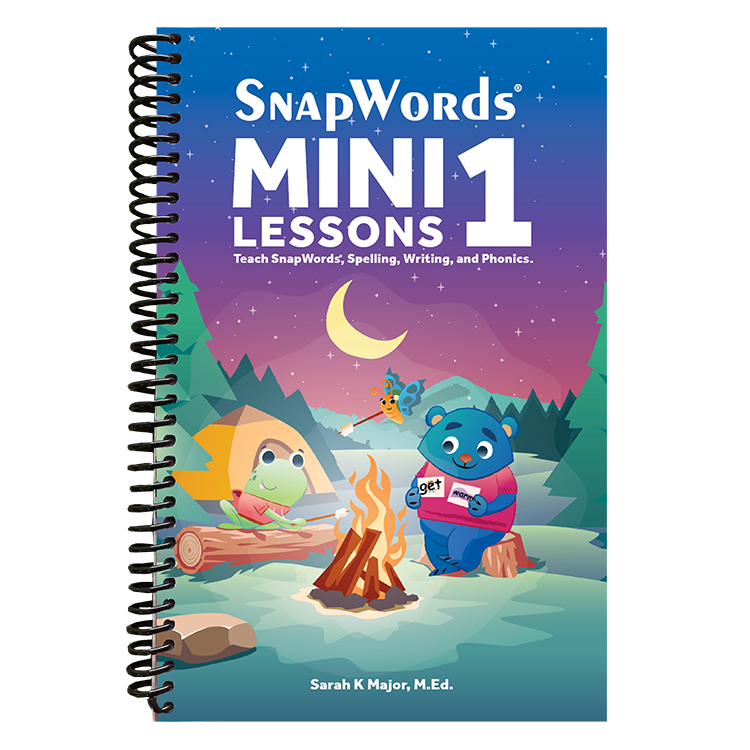
Everything you need to teach SnapWords® Lists A–E with depth, clarity, and confidence.

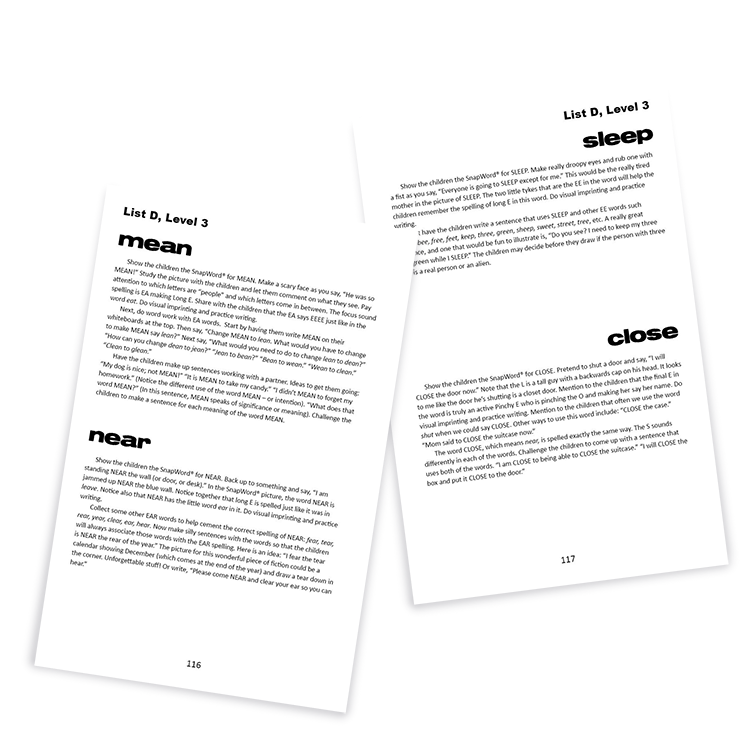
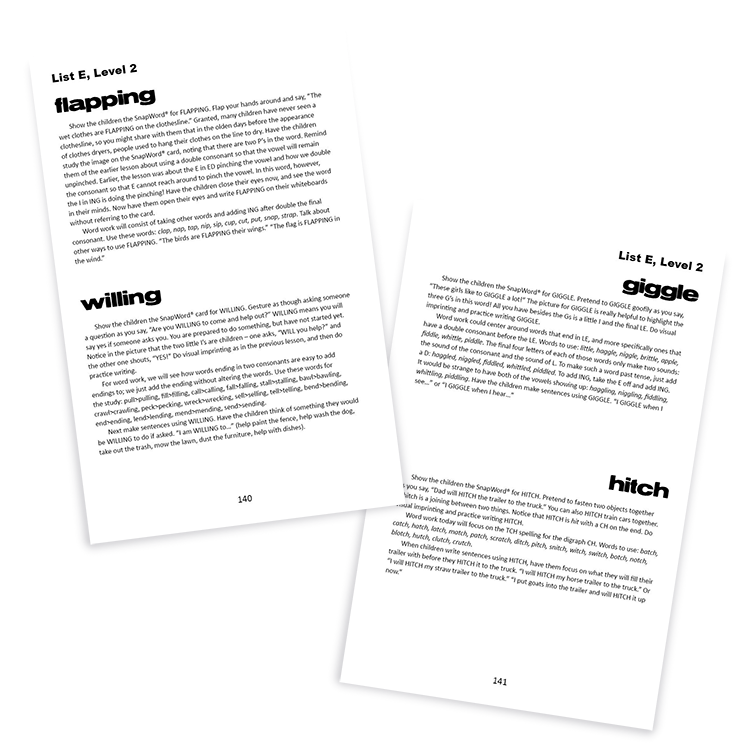
SnapWords® Mini-Lessons 1 provides structured, ready-to-use instruction for every word in Lists A, B, C, D, and E. Designed to move beyond simple word recognition, this resource helps students visualize, analyze, read, write, and fully understand each SnapWord®.

Each lesson builds strong connections between reading and writing while reinforcing phonemic awareness, structural analysis, and comprehension.


How It’s Organized

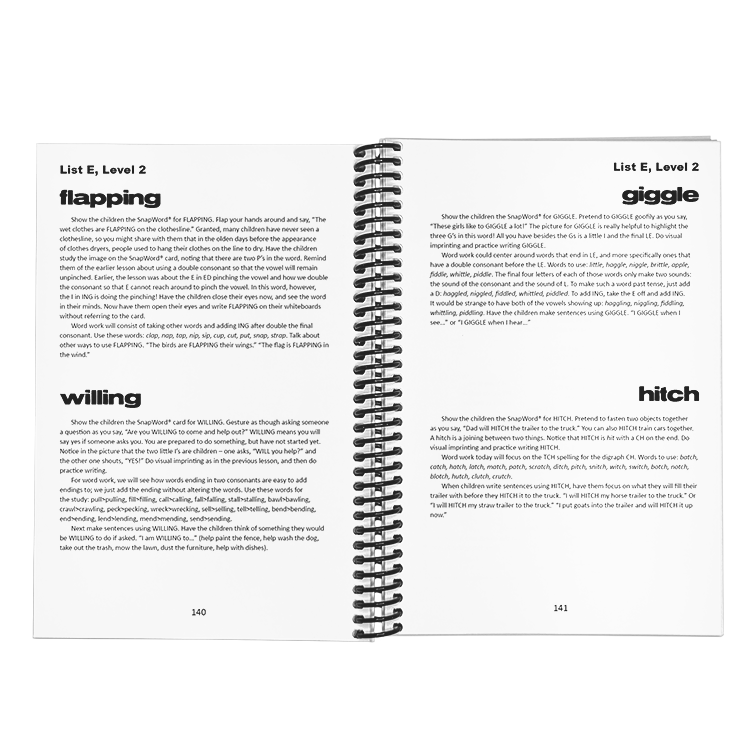
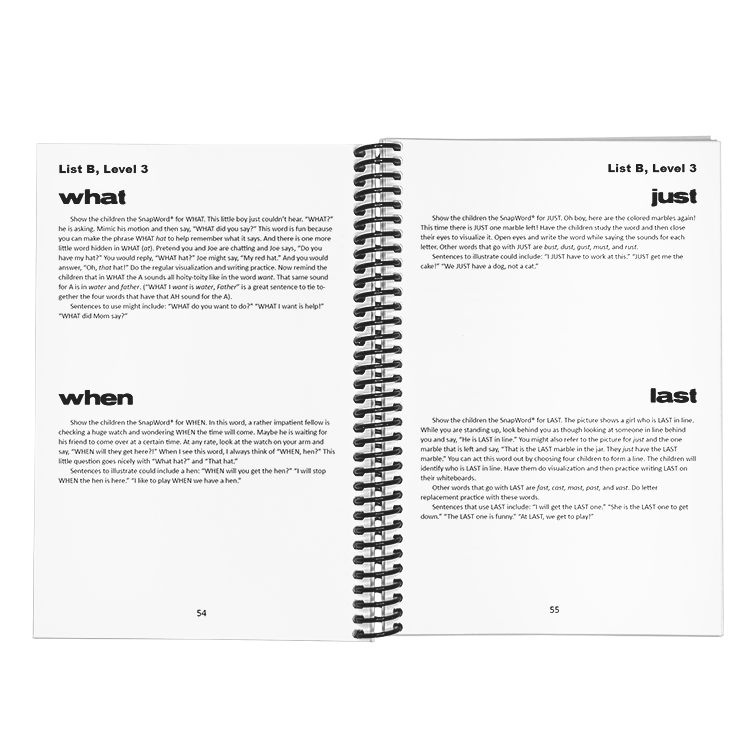
Part 1: Word-by-Word Instruction

  • Introduction and visualization prompts
  • Discussion of word features and structure
  • Phonics connections and spelling patterns
  • Comprehension questions
  • Writing extensions to reinforce meaning

Part 2: Reinforcement Through Play

  • Interactive games and review activities
  • Word building (oral and tactile)
  • Reading-to-writing connections
  • Structural analysis and phonemic awareness practice

This two-part approach ensures that students don’t just memorize words—they understand how they work and how to use them confidently.


What’s Included

  • 176 pages of instruction and activities
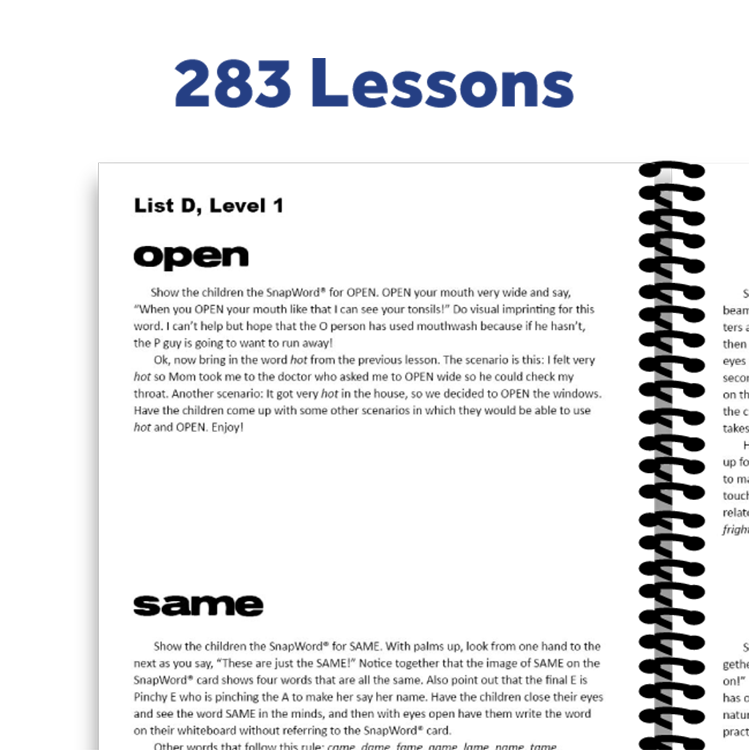
  • 283 Mini-Lessons — one for each SnapWord® in Lists A–E
  • 26 Games & Activities supporting:
    • Word recognition
    • Reading fluency
    • Writing development
    • Comprehension
    • Structural analysis
    • Phonemic awareness

A complete companion for maximizing the impact of SnapWords® Lists A–E.
  • Physical
    Physical book measuring 8.5" x 5.5", softcover
  • Download
    Printable PDF file of the book
You may also like

FAQs

Learning styles refer to the different ways in which individuals naturally approach and process information, influencing how people learn, understand, and remember new material. Learning styles matter because they impact how effectively individuals can absorb and retain information. Understanding and accommodating these natural strengths can enhance the learning experience in a multitude of ways.

Right-brain learners possess distinct characteristics that distinguish them from their left-brain counterparts. These characteristics pertain to their information intake, processing methods, and preferred memory strategies. When we discuss right-brain learning, we are essentially describing the way they naturally absorb, process, and retain information.

Right-brain dominant learning, often associated with the right hemisphere of the brain, refers to a learning style that emphasizes creative and holistic approaches to understanding and retaining information. Strategies that are highly effective include multisensory materials, visuals, stories, movement, and hands-on activities.

We intentionally avoid labeling our resources with specific grade levels or ages to place the emphasis on each child's unique abilities. While the skills covered typically span from kindergarten to third grade, individuals of various ages have found success with our materials.

Learning styles refer to the different ways in which individuals naturally approach and process information, influencing how people learn, understand, and remember new material. Learning styles matter because they impact how effectively individuals can absorb and retain information. Understanding and accommodating these natural strengths can enhance the learning experience in a multitude of ways.

Recently viewed